
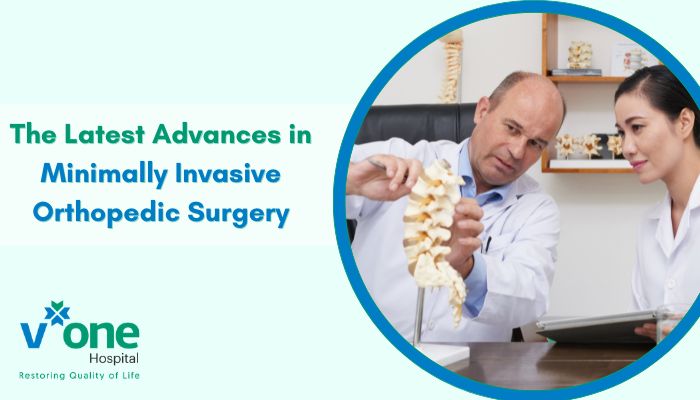
The Latest Advances in Minimally Invasive Orthopedic Surgery
Remember when a knee surgery meant weeks in a hospital bed, a long ugly scar, and months of gruelling recovery? That picture is changing — fast. Minimally invasive orthopedic surgery has quietly rewritten the rulebook on how bone, joint, and spine conditions are treated, and patients today are walking out of procedures that would have been week-long hospital stays just a decade ago. If you’ve been putting off getting that persistent joint pain checked, it might be time to rethink what “surgery” actually looks like in 2026.
So what exactly is minimally invasive orthopedic surgery?
Let’s start with the basics because the term gets thrown around a lot. Minimally invasive orthopedic surgery — also called MIS — uses small incisions, sometimes as tiny as a keyhole, instead of the large cuts traditional open surgery requires. Surgeons work with specialised tools, cameras, and real-time imaging to see inside your joint or spine without actually opening everything up.
Think of it this way: instead of opening a wall to fix a pipe, a plumber now uses a camera and a thin tool through a tiny hole. Less damage, same fix. That’s the philosophy behind MIS — and it’s changing the lives of patients every day.
The big advances that are actually making a difference
Technology in this space has moved incredibly quickly. Here are some of the most significant breakthroughs that orthopaedic doctors are now working with:
Arthroscopic techniques have also evolved dramatically. Originally developed for knee injuries, arthroscopy is now used in shoulders, hips, ankles, and even the spine. A tiny camera (called an arthroscope) is inserted through a small cut, projecting a live image onto a screen so the surgeon can repair ligaments, cartilage, and tendons with pinpoint accuracy — all while the patient recovers in a fraction of the usual time.
Then there’s computer-assisted surgery (CAS), which uses 3D imaging and real-time navigation systems to guide the surgeon throughout the procedure. It’s like GPS for the operating room — constantly tracking the position of surgical instruments relative to the patient’s anatomy, reducing the chance of error dramatically.
What conditions can actually be treated this way?
This is the question most patients have, and the honest answer is: a lot more than people think. The list of conditions now routinely handled through minimally invasive orthopedic techniques includes:
Knee and hip replacements are perhaps the most well-known. What used to mean a 25 cm incision and a two-week hospital stay can now often be done through incisions of 8–10 cm, with patients going home the same day or the next morning. ACL tears, meniscus damage, and rotator cuff injuries in the shoulder are all now standard arthroscopic procedures. Spinal stenosis, herniated discs, and vertebral fractures are increasingly treated through endoscopic spine surgery — a technique where a tube barely wider than a pencil is used to access the spine without disturbing the surrounding muscles.
What does recovery actually look like now?
This is where patients are genuinely surprised. Recovery from minimally invasive orthopedic surgery is not just a little faster — it can be dramatically shorter. Many patients undergoing arthroscopic knee surgery are walking the same day. Hip replacement patients done through MIS techniques are often climbing stairs by day three. Spine patients who would have been bedridden for six weeks are back at a desk in two.
Pain management has also improved alongside surgical technique. Because the muscles and soft tissues surrounding the joint aren’t being cut open and retracted, post-operative pain is significantly reduced. Many patients manage with oral pain relievers rather than IV medication, which also means fewer side effects and a clearer head during recovery.
Physical therapy still plays a crucial role — there’s no getting around that — but the starting point is so much further along that the overall arc of recovery is genuinely transformed.
Why your choice of surgeon and hospital matters more than you think
Here’s something that doesn’t get said often enough: minimally invasive surgery is harder to perform than open surgery. The restricted field of view, the specialised instruments, the reliance on imaging — it all demands a higher level of surgical skill and experience. Not every facility has the equipment, and not every surgeon has the training.
If you’re in central India and exploring your options, finding a skilled orthopaedic doctor in Indore with specific training in MIS techniques should be your first step. The difference in outcome between an experienced minimally invasive specialist and a general orthopaedic surgeon doing their first few MIS procedures can be significant — not just in terms of the surgery itself, but in how your rehabilitation is planned and managed.
At V One Hospital, the orthopedic department is equipped with the latest arthroscopic and robotic-assisted surgical systems, with a team of orthopaedic doctors who have dedicated their practice to minimally invasive approaches. From diagnosis to post-operative care, the entire pathway is built around getting patients back to full function with the least disruption to their daily lives.
How do you know if you’re a candidate?
Not everyone qualifies for minimally invasive techniques — and a good surgeon will be honest with you about that. Factors like the severity of the condition, your overall health, bone density, and previous surgeries can all influence whether MIS is the right route. That’s exactly why a thorough initial assessment matters so much.
If you’ve been living with knee pain, a stiff hip, a persistent shoulder problem, or back pain that isn’t responding to physiotherapy, the right conversation to have is with experienced orthopaedic doctors who can review imaging, assess your specific anatomy, and give you an honest, evidence-based opinion on what your options are.
Many people delay this conversation because they’re afraid of what they might hear. But the reality in 2026 is that the answer is often much less daunting than expected. Surgery that once meant months off work and a painful recovery now frequently means a short procedure, a day or two in hospital, and a carefully structured return to normal activity.
The bottom line
Minimally invasive orthopedic surgery isn’t a trend or a marketing phrase. It’s a genuinely transformative shift in how musculoskeletal conditions are treated — backed by decades of research, refined technology, and outcomes data that consistently shows better results for patients across the board.
If joint pain, spine problems, or sports injuries have been limiting your quality of life, don’t assume surgery means what it used to mean. Talk to the team at V One Hospital — where experienced orthopaedic doctors in Indore combine modern surgical technology with personalised care to help you move better, recover faster, and get back to living fully.
Your joints deserve the best that modern medicine can offer. And in 2026, that standard is higher than it’s ever been.

1 Comment
A WordPress Commenter
The practical examples make the technical concepts easier to apply.
equity research